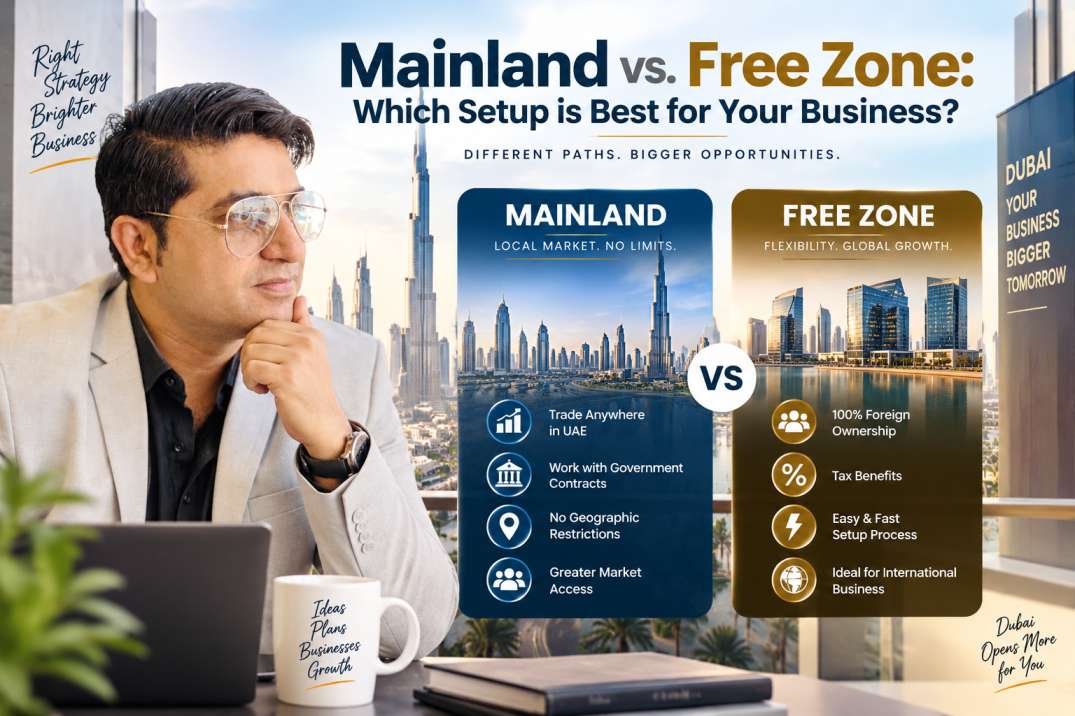


- Foreign investors can now own 100% of Mainland LLCs in Dubai across most commercial and professional activities under DET regulations.
- Free Zone entry points such as SHAMS, IFZA, and Meydan start from AED 12,500, making Dubai one of the most cost-competitive global business hubs.
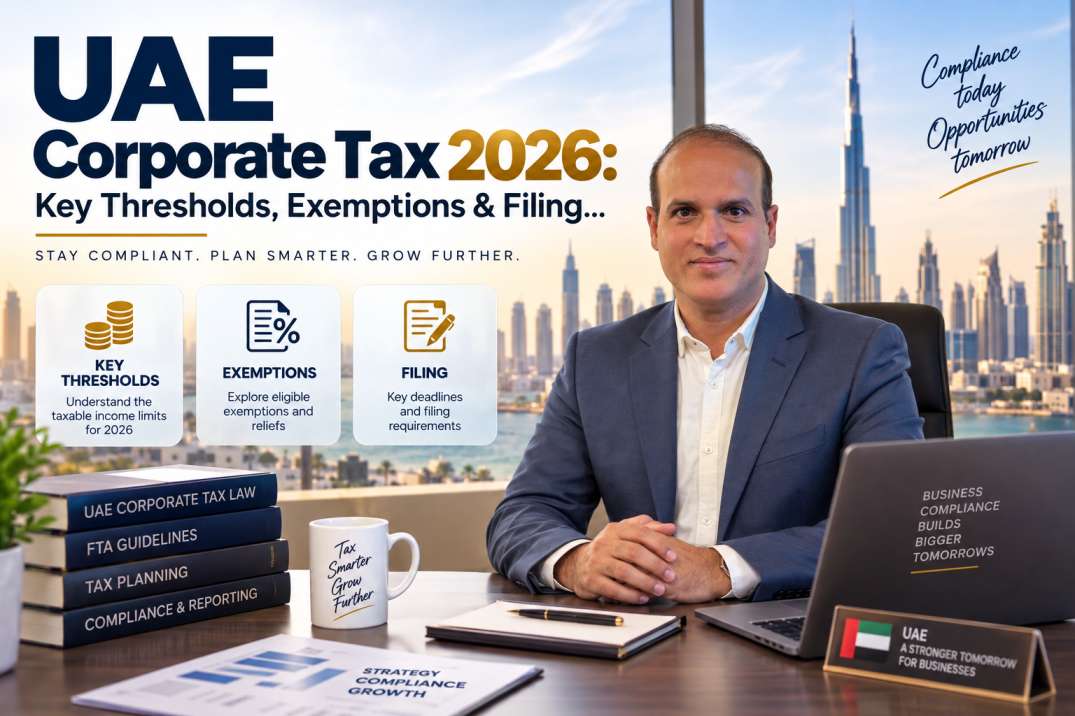
- All UAE legal entities, including Free Zone companies, must register for Corporate Tax and obtain a TRN under Federal Decree-Law No. 47 of 2022.
- Small Business Relief can reduce your effective Corporate Tax liability to zero if taxable revenue remains below AED 3,000,000.
Why Dubai Remains the World's Premier Jurisdiction to Start a Business in 2026
Every year, the debate resurfaces: is Dubai still the optimal jurisdiction to start a business, given rising global competition from Singapore, Ireland, and emerging Gulf hubs? Our advisory desk, having structured hundreds of foreign-owned entities across Mainland and Free Zone frameworks, can state unequivocally — Dubai's 2026 regulatory architecture is more attractive to serious investors than ever before, not less.
The reason is structural, not sentimental. Dubai combines a 0% personal income tax regime, a globally low 9% Corporate Tax rate applicable only above AED 375,000 in net profit, full foreign ownership rights, and an unmatched logistics and banking infrastructure connecting Asia, Africa, and Europe within an 8-hour flight radius. Add to this the UAE's expanding network of Double Taxation Avoidance Agreements and its removal from most international grey lists, and the compliance premium foreign investors once paid has effectively evaporated — provided the entity is structured correctly from day one.
The critical variable for 2026 is no longer 'can I set up a company in Dubai' — that question was settled years ago. The real question is: which jurisdiction, which licensing authority, and which tax posture will maximize your commercial flexibility while minimizing your compliance exposure under Federal Decree-Law No. 47 of 2022? That is precisely what this guide resolves.
Before selecting a jurisdiction, define your primary revenue driver — B2B mainland trading, e-commerce, consultancy, or holding structure — as this single decision determines your entire licensing, tax, and visa architecture downstream.
Mainland vs Free Zone: The Structural Decision That Shapes Everything
The single most consequential decision any foreign investor makes when starting a business in Dubai is choosing between a Mainland LLC and a Free Zone entity. This is not a cosmetic distinction — it determines your ability to trade directly with the UAE local market, your visa entitlements, your office obligations, and even your Corporate Tax exposure.
A Dubai Mainland company, licensed through the Department of Economy and Tourism (DET), permits direct trading anywhere in the UAE, unrestricted government contract eligibility, and no limitation on the number of visas relative to your leased office space. Since the amendment permitting 100% foreign ownership in most commercial and professional activities, Mainland has become the preferred structure for investors targeting the UAE domestic consumer or B2B market. Full details on Mainland licensing routes are available on our /dubai-mainland advisory page.
Free Zones, by contrast, remain unmatched for investors focused on international trade, digital services, consultancy, media, or holding structures that do not require direct access to the UAE mainland retail market. Zones such as Meydan Free Zone (/meydan-freezone), IFZA in Dubai Silicon Oasis (/ifza-freezone), and Sharjah Media City (/shams-freezone) offer lower entry costs, flexi-desk arrangements, and streamlined visa issuance — often within 2 to 4 working days. The trade-off is that direct Mainland market access typically requires appointing a local distributor or opening a Mainland branch.
The 2026 Cost & Timeline Matrix: Comparing Dubai's Leading Jurisdictions
Pricing transparency is where most first-time investors get misled by unregulated intermediaries quoting artificially low 'starting from' figures that exclude mandatory visa, office, and government approval costs. Below is our verified 2026 pricing matrix, reflecting genuine all-inclusive package entry points across the jurisdictions we most frequently structure for international clients.
Note that Free Zone packages listed include flexi-desk or co-working access and a defined visa allocation (typically 1 to 6 visas depending on the package tier), while the DET Mainland license cost is calculated independently of office rent, since visa quota is directly tied to leased square footage under Dubai's Ejari system.
Always request a full itemized quotation covering license, visa, Ejari/flexi-desk, medical, Emirates ID, and establishment card fees before committing. 'From' pricing without itemization is the leading cause of investor budget overruns in the UAE.
| Jurisdiction | License Cost (From) | Visa Allocation | Setup Timeline |
|---|---|---|---|
| SHAMS Free Zone | AED 12,500 | 1-2 Visas | 3-5 Days |
| SPC Free Zone (Sharjah) | AED 12,900 | 1-3 Visas | 3-5 Days |
| IFZA Dubai Silicon Oasis | AED 14,900 | Up to 6 Visas | 2-4 Days |
| Meydan Free Zone | AED 15,000 | Up to 6 Visas | 2-4 Days |
| DET Mainland LLC | AED 18,500 | Per Office Size | 5-7 Days |
Corporate Tax, TRN Registration, and Small Business Relief: What Every Founder Must Know
Since the introduction of Federal Decree-Law No. 47 of 2022, Corporate Tax compliance is no longer optional or Mainland-exclusive — it applies universally to every UAE legal entity, including Free Zone companies, foreign branches, and even certain sole establishments. Registration for a Tax Registration Number (TRN) with the Federal Tax Authority is mandatory regardless of whether your entity ultimately owes tax.
The headline rate structure is straightforward: 0% Corporate Tax applies to taxable net profit up to AED 375,000, while a 9% rate applies to net profit exceeding that threshold. This tiered structure means the vast majority of early-stage SMEs, startups, and single-owner consultancies operate well within the 0% bracket in their formative years.
For businesses generating taxable revenue below AED 3,000,000 annually, the Small Business Relief provision offers an additional layer of protection — allowing eligible entities to be treated as having no taxable income for the relevant tax period, subject to conditions and election requirements confirmed with the FTA. However, Free Zone entities seeking to retain the preferential Qualifying Free Zone Person (QFZP) 0% regime on qualifying income must strictly maintain adequate substance, audited financials, and comply with de minimis requirements — a nuanced area where generic online guidance frequently misleads investors.
Given the complexity and the FTA's increasingly assertive audit posture in 2026, we strongly advise engaging a licensed Corporate Tax advisor for both initial registration and ongoing filing. Our dedicated Corporate Tax registration and compliance service is detailed at /corporate-tax-filing-dubai, and should be paired with disciplined bookkeeping from inception — a service we structure through /accounting-services-in-dubai to ensure your financials are audit-ready year-round.
Register for Corporate Tax within 3 months of incorporation to avoid FTA administrative penalties, and implement cloud accounting from your first invoice — retroactive bookkeeping is the single largest cause of Corporate Tax filing delays we encounter.
The Step-by-Step Roadmap to Launching Your Dubai Company
Beyond jurisdiction selection, the mechanical process of starting a business in Dubai follows a predictable sequence once your legal structure is finalized. Understanding this sequence in advance prevents the delays that typically arise from incomplete documentation or misaligned activity codes.
While Free Zone timelines can compress to as little as 2 working days for straightforward consultancy or trading licenses, Mainland LLCs involving external approvals — such as from the Dubai Municipality, KHDA, or DHA for education and healthcare activities — should be budgeted at 5 to 7 working days minimum, and longer where third-party regulator sign-off is required.
Opening a Tier-1 UAE Corporate Bank Account: The Final and Most Underestimated Hurdle
Foreign investors are frequently surprised to learn that securing a UAE corporate bank account has become more rigorous than the licensing process itself. Post-2023 enhanced KYC and AML frameworks mean that Tier-1 banks — Emirates NBD, Mashreq, ADCB, and FAB — now conduct detailed due diligence on shareholder nationality, source of funds, business model substance, and even the physical presence of directors during account opening.
The single greatest predictor of banking success is not the size of your paid-up capital, but the coherence of your documentation: a clear business plan, invoices or contracts evidencing genuine commercial activity, and a licensed office address rather than a bare flexi-desk in higher-risk activity categories. Investors who engage a licensed corporate service provider to pre-package their banking file typically see approval in 2 to 4 weeks, compared to months of rejection cycles for unassisted applicants.
At Fast Company Setup by EBMS, our Tier-1 banking introduction service is bundled into every formation engagement precisely because we have observed banking, not licensing, as the true bottleneck to operational launch in 2026.
Never activate a trade license without first confirming banking feasibility for your specific nationality and activity combination — certain high-risk activities require pre-approval before a license is even issued.
Visas, Residency, and the Golden Visa Pathway for Founders
Starting a business in Dubai is inseparable from securing your own residency and that of your team. Standard investor and employment visas are tied directly to your license package and office footprint, with allocations ranging from 1 visa on entry-level Free Zone packages up to 6 or more on premium Mainland and Free Zone tiers.
For founders and high-net-worth investors, the UAE Golden Visa offers a compelling long-term alternative: a renewable 10-year residency requiring no local sponsor, typically available to company owners meeting minimum capital or real estate investment thresholds, alongside qualifying professionals and specialized talents. We recommend founders evaluate Golden Visa eligibility at the point of incorporation, as certain corporate structuring decisions — such as minimum share capital declarations — directly affect eligibility later.
Frequently Asked Questions
Questions About This Topic
EBMS Senior Advisory Team
Senior Company Formation ConsultantCompany Formation DeskSenior Company Formation Consultant
Experienced corporate structuring and commercial licensing specialist at Fast Company Setup LLC FZ with extensive on-the-ground advisory in Dubai Mainland and Free Zone jurisdictions.