

- Ajman Free Zone (AFZA) is administered independently of Dubai's DET and issues its own trading, industrial, service, and e-commerce licenses under Emirate-level regulations.
- All Ajman Free Zone entities must still register for UAE Corporate Tax and obtain a TRN, even if annual revenue stays below the AED 375,000 taxable profit threshold.
- AFZA is often selected for cost efficiency and warehousing/industrial needs, but Dubai free zones such as Meydan, IFZA, and SHAMS offer stronger banking optics and central-Dubai business addresses.
- Choosing between Ajman and a Dubai free zone should be based on visa needs, target clientele, banking strategy, and long-term Golden Visa or mainland conversion plans.
What Ajman Free Zone Actually Is and Who Regulates It
Ajman Free Zone Authority (AFZA) is the government body responsible for licensing, regulating, and administering free zone companies within the Emirate of Ajman. Unlike Dubai's Department of Economy and Tourism (DET), which governs mainland licensing in Dubai, or Dubai-based free zones such as Meydan and IFZA, AFZA operates under its own independent framework established by the Ajman government. This means Ajman Free Zone entities are governed by AFZA's own company regulations, fee schedules, and renewal cycles, separate from Dubai's free zone ecosystem.
For foreign entrepreneurs, this distinction matters. An Ajman Free Zone license grants 100% foreign ownership, full repatriation of profits and capital, and no requirement for a UAE national sponsor, consistent with free zone structures across the UAE. However, an AFZA license restricts direct trading within the UAE mainland unless the company appoints a distributor, opens a mainland branch, or works through a local service arrangement, similar to restrictions seen in other free zones nationwide.
Ajman has historically attracted businesses focused on warehousing, light industrial operations, general trading, and cost-sensitive startups due to its geographic proximity to Dubai and Sharjah combined with comparatively accessible entry costs. That said, entrepreneurs should evaluate whether an Ajman address aligns with their target market, particularly if most clients, banking relationships, or supply chains are concentrated in Dubai.
Before committing to Ajman, map out where your customers, suppliers, and bank relationship managers are physically based. A Dubai-registered free zone address, such as Meydan or IFZA, can sometimes carry more weight during bank account approval interviews.
Ajman Free Zone License Categories and Eligible Business Activities
AFZA structures its licensing around several core categories, each tied to a defined scope of permitted activities. Selecting the correct category upfront avoids costly amendments later, since activity changes typically require a license modification fee and updated documentation.
Commercial (trading) licenses cover general trading, import-export, and distribution activities and are the most commonly requested category among foreign investors entering Ajman Free Zone. Industrial licenses are designed for businesses involved in manufacturing, assembly, or processing, and typically require dedicated warehouse or industrial unit space rather than a flexi-desk. Service licenses cover consultancy, IT, marketing, and professional service activities, while e-commerce licenses have grown significantly in demand as AFZA has expanded digital-first packages for online retail and dropshipping operators.
Ajman Free Zone also permits holding company structures for investors who want to consolidate ownership of other UAE or international entities under a single Ajman-registered holding vehicle, without conducting direct commercial activity themselves. This is a structure worth discussing with a formation advisor if your long-term plan involves multiple subsidiaries or asset-holding purposes.
Step-by-Step Ajman Free Zone Company Formation Process
The AFZA registration process follows a structured sequence that broadly mirrors other UAE free zone jurisdictions, though document handling and approval timelines are managed through Ajman's own systems rather than Dubai's DET or a Dubai free zone portal.
The process generally begins with selecting a trade name that complies with UAE naming conventions (no offensive or religiously sensitive terms, no reference to government bodies without approval) and confirming activity eligibility with AFZA. Once the trade name is reserved, investors submit passport copies, a completed application form, a business plan summary (for certain activity categories), and proof of address. AFZA then issues an initial approval, followed by lease documentation for a flexi-desk, office, or warehouse unit depending on the license type chosen.
After lease finalization, the free zone issues the trade license, which activates the entity as a legal UAE company. From there, investors proceed to establishment card issuance, visa quota allocation, and, where applicable, corporate bank account opening — a step that increasingly requires substantive supporting documentation under 2026 compliance expectations from UAE banks.
Banks and government departments increasingly cross-check license activity descriptions against actual business operations. Ensure your AFZA license activity wording accurately reflects what you intend to invoice for, since mismatches can delay bank account approvals significantly.
Costs, Visa Allocations, and Corporate Tax Obligations in 2026
Ajman Free Zone is frequently marketed on cost-competitiveness relative to Dubai-based free zones, and this remains broadly accurate, particularly for flexi-desk trading and service licenses without significant visa requirements. However, AFZA maintains its own independent fee schedule that is periodically revised, and published third-party figures online are not always current. Entrepreneurs should always request a written, itemized quotation before proceeding, since license fees, establishment card charges, and visa costs are typically billed as separate line items.
Regardless of which free zone an entity is registered in, whether AFZA, RAKEZ, SHAMS, SPC, IFZA, or Meydan, every UAE legal entity is subject to Federal Corporate Tax law. The standard rate is 9% on taxable net profit exceeding AED 375,000, with a 0% rate applying to taxable profit up to that threshold. Businesses with taxable revenue below AED 3,000,000 may qualify for Small Business Relief, which can simplify compliance obligations, though eligibility criteria should be reviewed annually since revenue can fluctuate. Mandatory Tax Registration Number (TRN) registration applies to all legal entities, including every free zone company, regardless of whether it ultimately owes tax.
Visa entitlement in Ajman Free Zone is tied to the physical office or facility size leased, similar to Dubai free zones. Flexi-desk packages typically allow a modest number of visas, while dedicated offices or warehouse units unlock higher quotas. Investors planning to sponsor multiple employees or dependents should size their facility lease accordingly from the outset, since upgrading later involves additional lease and immigration file amendments.
Free zone status does not exempt a company from Corporate Tax registration. Our team supports full compliance through /corporate-tax-filing-dubai, and once operational, ongoing bookkeeping through /accounting-services-in-dubai keeps your filings audit-ready.
| Jurisdiction | Typical Entry Package | Visa Allocation | Best Suited For |
|---|---|---|---|
| Ajman Free Zone (AFZA) | Confirm current AFZA rate with advisor | 1-6 visas (facility-dependent) | Warehousing, industrial, cost-sensitive trading |
| SHAMS (Sharjah) | From AED 12,500 | 1-6 visas | Media, creative, consulting startups |
| SPC Free Zone (Sharjah) | From AED 12,900 | 1-6 visas | Publishing, trading, professional services |
| IFZA (Dubai Silicon Oasis) | From AED 14,900 | 1-6 visas | General trading, consultancy, growth-stage SMEs |
| Meydan Free Zone (Dubai) | From AED 15,000 | 1-6 visas | Central Dubai address, client-facing businesses |
Ajman Free Zone vs Dubai Free Zones: Which Structure Fits Your Business
The decision between Ajman Free Zone and a Dubai-based alternative should rest on more than headline license price. Ajman offers genuine cost advantages for industrial and warehousing operators who need physical storage or light manufacturing space at a lower price point than Dubai's industrial zones. It also suits founders running lean, low-visibility online businesses where a prestigious Dubai address carries limited commercial value.
On the other hand, businesses that depend on client meetings, investor confidence, banking relationships, or Golden Visa eligibility tied to Dubai-based investment activity often find that a Dubai free zone address strengthens both operational credibility and financial institution trust. Meydan Free Zone, for instance, is positioned for founders wanting a recognized central-Dubai commercial address, while IFZA in Dubai Silicon Oasis is known for flexible activity bundling and scalable visa packages. SHAMS and SPC, both administered from Sharjah, offer a middle ground — competitive entry pricing similar to Ajman, but with slightly different activity permissions and banking reputations depending on the receiving bank's internal risk policies.
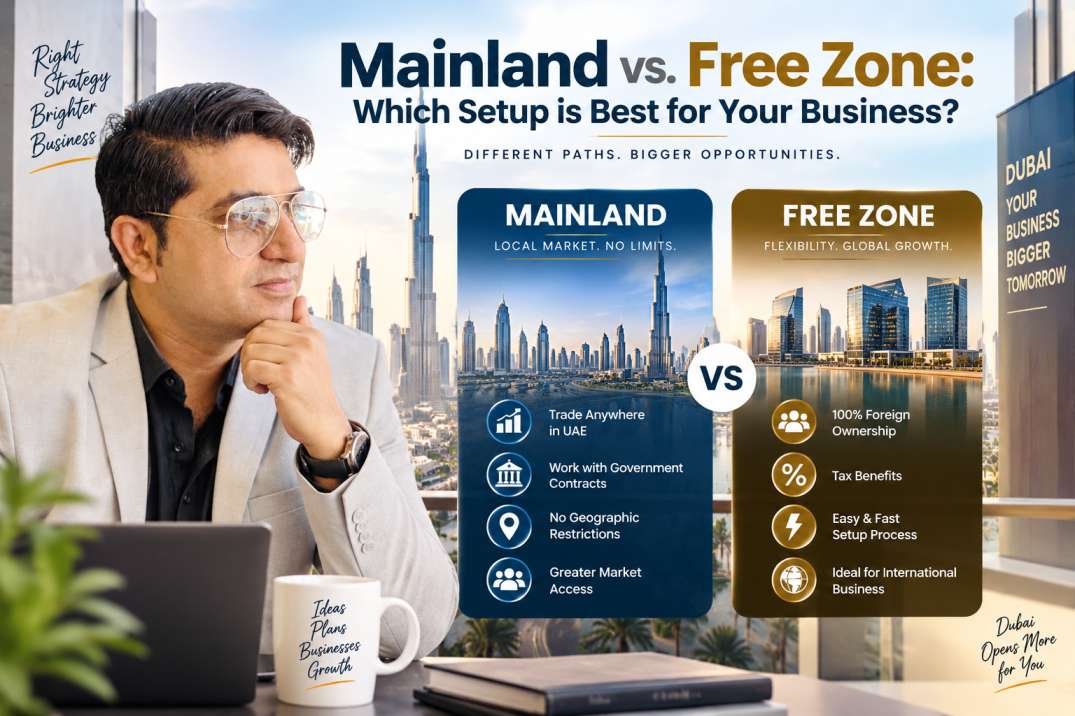
If your business model requires mainland market access from day one, comparing a Mainland DET license against any free zone option, including Ajman, is essential, since mainland structures permit direct trading across the UAE without a distributor or local agent for most activities. Our team frequently structures hybrid setups, for example a free zone holding entity paired with a mainland operating branch, to balance cost efficiency against market access.
EBMS advisors compare AFZA, Meydan, IFZA, SHAMS, SPC, and Mainland options side-by-side against your specific activity, visa needs, and banking goals before recommending a jurisdiction — rather than defaulting to a single package.
Frequently Asked Questions
Questions About This Topic

Abdul Salam
Licensed UAE Corporate AdvisorFree Zones & Mainland DeskCEO
Specialized consultant comparing 40+ UAE free zones including IFZA, Meydan, SPC, and SHAMS for international tech and trading ventures.